Week 7: The Church
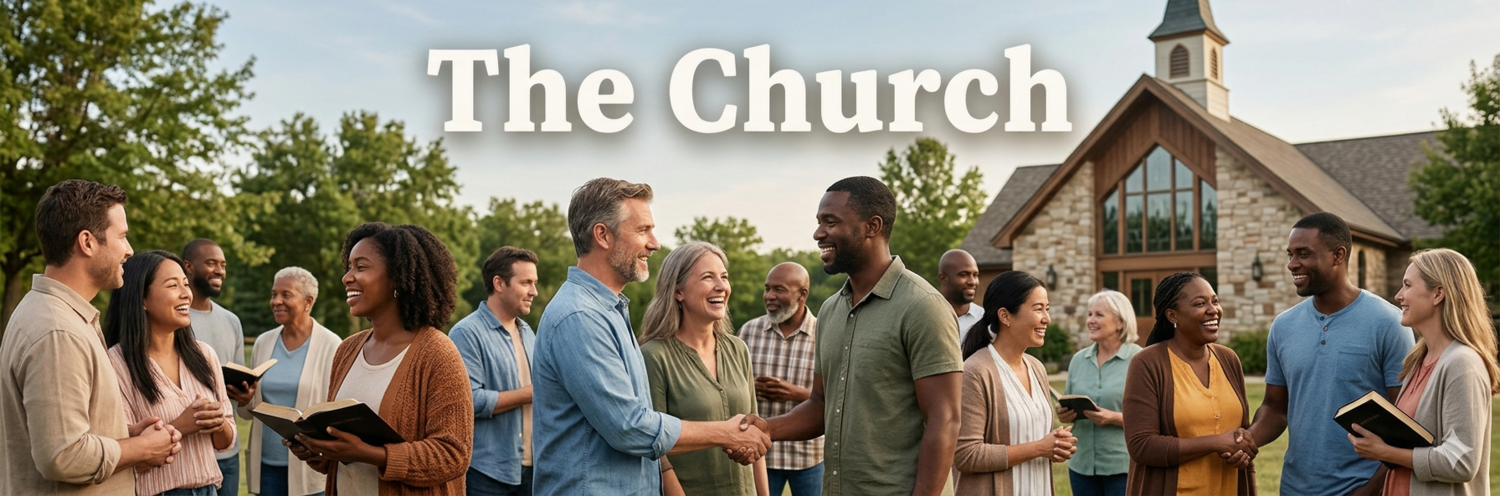
The Church is God's chosen community, united in Christ and empowered for His mission in the world. As Christ's body on earth, it serves as both a spiritual family and a vessel for God's work in the world.
God's Family on Mission
The early church provides us with a compelling picture of community: "They devoted themselves to the apostles' teaching and to fellowship, to the breaking of bread and to prayer" (Acts 2:42). This wasn't just a group of people who shared similar beliefs; it was a transformed community marked by deep devotion to God and to one another. Their example challenges our often casual approach to church involvement and calls us to something deeper.
Paul's metaphor of the church as a body (1 Corinthians 12:12-14) revolutionizes how we view both unity and diversity in the church. Like a physical body, each part is different yet essential, independent yet interconnected. This image confronts both our tendency toward individualism ("I don't need the church") and our pressure toward uniformity ("everyone should serve like I do"). In God's design, diversity strengthens rather than threatens unity.
The purpose of church leadership, Paul explains, is "to equip his people for works of service, so that the body of Christ may be built up" (Ephesians 4:11-13). This reveals that the church isn't meant to be a spectator sport where professional Christians perform for an audience, but a training ground where every believer is equipped for ministry. Growth happens as each member actively participates in the body's life and mission.
Jesus' declaration, "I will build my church, and the gates of Hades will not overcome it" (Matthew 16:18), reminds us that the church isn't a human organization but a divine institution. Despite centuries of external opposition and internal failures, the church continues to advance because it's built and sustained by Christ Himself. This gives us confidence in the church's ultimate success while keeping us humble about our role in it.
The writer of Hebrews challenges us not to neglect meeting together (Hebrews 10:24-25), understanding that regular gathering is essential for mutual encouragement and spiritual growth. In an age of individualized spirituality and online options, this reminder of the irreplaceable value of physical presence and face-to-face fellowship becomes increasingly vital.
Peter's description of the church as a chosen people, a royal priesthood, a holy nation, God's special possession* (1 Peter 2:9-10) establishes both our identity and our purpose. We're chosen not for privilege alone but for service - to "declare the praises of Him who called you out of darkness into his wonderful light." The church exists both to experience God's grace and to extend it to others.
John's vision of "a great multitude that no one could count, from every nation, tribe, people and language" (Revelation 7:9-10) shows us where this is all heading. The church's diversity isn't a modern innovation but God's eternal design, and our present efforts to build bridges across cultural, ethnic, and social divides participate in this future reality.
This week, le's view our church involvement through fresh eyes. Whether we're gathering for worship, serving in ministry, or connecting in small groups, we're participating in something far greater than ourselves. The church, with all its human imperfections, remains God's chosen vehicle for displaying His wisdom to the world and extending His kingdom on earth. Our investment in the church isn't just about personal growth or social connection - it's about joining God's ongoing work of transformation in the world.
Reading Plan
Day 1 | Acts 2:42-47 - Early church model
Day 2 | 1 Corinthians 12:12-14 - One body, many parts
Day 3 | Ephesians 4:11-13 - Church leadership and growth
Day 4 | Matthew 16:18 - Christ builds His church
Day 5 | Hebrews 10:24-25 - Fellowship of believers
Day 6 | 1 Peter 2:9-10 - Identity of the Church
Day 7 | Revelation 7:9-10 - The global church
Reflection
-
What one gift or skill do you have that could serve your church community this week?
Who could you contact about using it?
-
Name someone on the fringes of your church community - what specific action could you take this week to help them feel more connected?
-
How could you strengthen your connection to the church beyond Sunday service this week?
Choose one practical way to engage.
Weekly Blessing
May you experience the deep blessing of genuine fellowship this week, both receiving and extending the love of Christ through his body, the church.
